DISCUSSION GUIDE
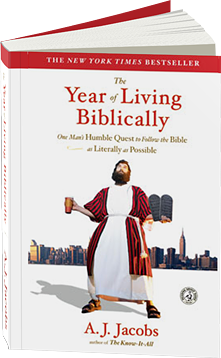
INTRODUCTION A.J. Jacobs embarks on a year long journey to follow the many rules, guidelines, and suggestions he uncovers in the Bible. He tackles not only popular injunctions like the Ten Commandments but obscure and perplexing rules like the ban on wearing clothes made of mixed fibers and the blowing of trumpets on the start of each month. In all, more than 700 rules. Jacobs hopes that his venture into a stringent and literal biblical life will reveal the Bibles enduring truths for modern consumption as well as what might not be relevant to our 21st century life. With a mix of reverence and irreverence, humor and earnestness, Jacobs plunges us in world where the mundane can easily become a profane or sacred act. Though we may be tempted to judge and dismiss biblical literalism as bizarre and out-of-sync, Jacobs own wonderment at lifes renewed beauty and preciousness cause us to pause; maybe following the Bible to the letter helps us find the transcendent in the routines of daily life. But following the Bible to the letter also has many pitfalls. Jacobs book is both a personal spiritual journey and an examination of religion in America today. Thou shalt enjoy. Questions | Conversation with A.J. Jacobs READING GUIDE QUESTIONS
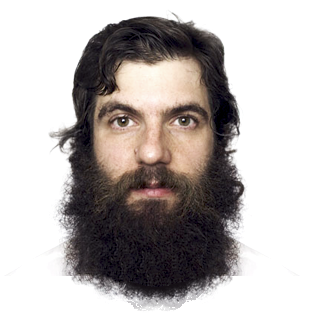
A CONVERSATION WITH A.J. JACOBS Q: Which was harder: reading the encyclopedia for the KNOW-IT-ALL, or living biblically for THE YEAR OF LIVING BIBLICALLY? AJ: Living biblically, hands down. For the encyclopedia, I had to read 44 million words, which was certainly challenging. (those 21 long pages on Portuguese literature come to mind). But the Bible project changed my life more deeply. It affected every part of my existence: the way I ate, dressed, talked, bathed, walked, worked and raised my kids. Not to mention the beard. It got so big, my wife wouldn't kiss me for the last two months. Q: Why in heaven's name did you decide to do it? AJ: To see what if anything I was missing by having no religion in my life. I grew up in an incredibly secular home. As I say in the book, I'm Jewish in the same way that the Olive Garden is Italian. Not very. But I've become increasingly interested in the role of religion in our world, and I also have a young son, and wanted to know what to tell him about the Bible. So I decided to dive in head first. To immerse myself. I wanted to get into the minds of the ancients who wrote it. Or into their sandals, I suppose. I wanted to figure out what in the Bible was relevant and good for me, and what was maybe not so relevant. Q: What were the hardest rules to follow? AJ: It's difficult to choose there were so many hard ones. First, the rules about avoiding the sins we all commit every day. No gossiping. No lying. No coveting. Remember, I live in New York, and I work as a journalist, so that's 60 or 70 percent of my day right there. I also found observing the Sabbath to be a fearsome challenge. I'm a workaholic, so not being able to work for a day was like going cold turkey. But it turned out to be one of my favorite things about biblical living. It's a beautiful ritual, the Sabbath, no matter what your beliefs are. And then there were the rules that will get you into trouble in 21st century America. Such as, well, stoning adulterers. Q: Were you able to stone an adulterer? AJ: Just one. I was walking in the park dressed in full biblical attirewhite clothes, sandals, a staffand an elderly man asked me what I was doing. I explained that I was trying to abide by all the rules of the Bible, including stoning adulterers. He said, I'm an adulterer. You gonna stone me? And I said, Well, yes, that would be great. I showed him some pebbles from my pocket that I had stored for just this occasion. He grabbed the pebbles out of my hand and whipped them at me. So I decided, an eye for an eye. And tossed one at him. And in that way I stoned. Q: You started out the book as an agnostic. Are you still one? AJ: It was a life-changing and perspective-changing year. In the end, I became what a minister friend of mine calls a reverent agnostic. Which is a phrase I love. Because whether or not there's a God, I believe in the idea of sacrednessthat rituals can be sacred, that the Sabbath can be sacred, and there's great importance to that. So I'm still agnostic, but a deeply different kind of agnostic. Q: For THE YEAR OF LIVING BIBLICALLY you embedded yourself in communities that try to live closely to the Bible, to name a few: the Amish in Lancaster, PA, the Hasidic Jews in Brooklyn, the owners of the Creationist Museum in Kentucky, evangelical Christians at Rev. Falwell's church in Lynchburg, VA, and Samaritans in Israel. What did you take away from these experiences? AJ: Well one thing is, I'm very excited because I think I'm the first person to out-Bible-talk a Jehovah's Witness. He came to my apartment, and after three and a half hours, he looked at his watch, and told me he had to go. He couldn't take it anymore. As for lessons I learned, perhaps the biggest was Thou shalt not stereotype.' Every preconception I had was smashed when I actually spent time with these groups. I had some very narrow notions about evangelical Christianity before the year. But I found it's such a varied movement, you can't make sweeping generalization about it. For instance, I met an evangelical group called the Red Letter Christians. Instead of focusing on, for instance, homosexuality, the Red Letter Christians stress the literal words of Jesus and his teachings on compassion and peace. Q: How did your family take it? AJ: My wife Julie is a saint. I should say that right up front. Even allowing me to do the Bible project should qualify her for sainthood. I should say, there were many aspects of the year that actually enhanced our lives. I think Julie was happy that I became grateful, tolerant and thoughtful. She loved that I observe the Sabbath. On the other hand, there were many things that drove her crazy. The Old Testament says that you can't touch women during certain times of the month. But if you take it really strictly, it says you cannot even sit on a seat on which a menstruating woman has sat. My wife thought this was offensive, and sat on every seat in our apartment. So I ended up standing for much of the year. Q: What kind of reaction have you received from readers, both secular and religious? AJ: I've been surprised. I actually expected the book to be somewhat controversial, because it deals with such a divisive issue religion. But so far, I've experienced very little controversy. But I've been blessed, as the Bible might say, to have received mostly warm feedback from both the secular and religious communities. I think religious people were happy that I took the Bible very seriously and found much good in it. And secular people appreciated that I questioned the wisdom of literal interpretation of the Bible. This might qualify as boasting, so please forgive me, but when the book came out, I was on the cover of an evangelical Christian magazine, but also featured in Penthouse. So I felt I had bridged some sort of gap. Q: You've referred to your year as an extreme religious makeover.' What has stuck with you? AJ: The Bible Project changed my life in ways both big and small. I'm much more grateful than I used to be. Gratitude is a huge theme in the Bible. I try to be thankful for the 100 little things that go right in a day instead of focusing on the 3 or 4 that go wrong. And perhaps this is boasting, which is highly unbiblical, but I think the year made me a slightly better person. I try to lie and gossip lessemphasis on the word try. Also, I wear more white clothes than I used to. In Ecclesiastes, the Bible says that our garments should always be white. I took that literally. And it was wonderful. It made me a happier person. I felt more spiritual, lighter. I thought, how can I be in a bad mood if I look like I'm about to go play the sem-finals at Wimbledon? Q: Are you going to raise your sons differently? AJ: After the year, my wife and I decided to join a synagogue in our neighborhood. Granted, it's a reform temple And we don't go very often. (But I do pay the annual fees. Which from the letters they send, is a very important part). We're going to send our sons to Hebrew school. I don't care whether they become Hitchens-like atheists or believers. As long as they're good people, I'll be happy. But I thought it was a good idea to give them a basis in religion, so they'll know what they're accepting or rejecting. Q: How did it change your view on religion? AJ: In several ways. I feel I better understand some of the great things about religion, and have incorporated many of them into my life. I also learned that interpreting the Bible too literally can be dangerous. I learned that you can't follow every single rule in the Bible. There is a certain amount of picking and choosing. And fundamentalists call this cafeteria religion, and they mean it as an insult. But I say: What's wrong with cafeterias? I've had some delicious meals at cafeterias. It's all about choosing the right parts of the Bible, the ones about compassion and helping your neighbor. I also learned that even the rules that seem crazy at first can have a deeper meaning. Q: Did you have anyone helping you along the way? AJ: Yes, I had a wonderful board of spiritual advisers: rabbis, priests, and ministers of all denominations. I knew this was a massive undertaking, so I wanted all the help that I could get. I still keep in touch with most of my advisers to this day. Q: Were you able to get into the sandals of your forefathers? AJ: Not completely but somewhat. My worldview became more biblical. For instance, in the Bible, there's no such thing the individual. The smallest unit of society in biblical times was the family or tribe. Because of my year, I've toned down my individualism. I see myself more as a member of the community, not as an island. As for getting into the literal sandals of my forefathers, I don't know if Tevas count. But I wore those a lot. I also ate biblical foodsincluding crickets, which are, incidentally, allowed in the Bible. I walked around in a robe, which I liked. There's something freeing about not having to wear pants. Q: Do you still have the beard? AJ: Well, I shaved it off. But I did keep it as a souvenir. It's in a plastic bag under my sink. I wanted to give out tufts of hair with the first 100 books sold. The publisher put the kibosh on that. Which was probably a wise decision. ENHANCING YOUR BOOK CLUB Type up the Ten Commandments for your reading group members. Distribute this list to members and challenge them to follow the list and live as Jacobs did for seven days. Bookclub members may choose to follow one commandment per day or attempt a few simultaneously for the seven days. Members should keep a journal of their daily experiences. When members meet to discuss the book, ask a few to volunteer to read excerpts from their journal. Discuss the following:
RECIPES Assemble a biblical feast for book club members using food items commonly listed in the Bible. Popular items include: wine, grapes, pomegranate, figs, cucumbers, olives, chickpeas and lamb. You may procure goats milk, the dairy product of choice at your local specialty grower or find a store online. Additionally, Jacobs recommends chocolate covered crickets from here, http://www.flukerfarms.com. For an extra bit of effort, you may use the recipe below to make Ezekiel Bread for the group. Ezekiel Bread (http://www.breadbeckers.com/recipes/ezekiel_bread.htm) Combine the following whole grains:
Measure into large bowl:
Freshly milled flour from the above mixture of grains
Pour dough into greased pans. You may use 2 large loaf pans (10x5x3) or 3 med. loaf pans or 2-9x13 brownie pans. Let rise in a warm place for one hour or until the dough is almost to the top of the pan. If it rises too much it will over flow the pan while baking. Bake at 350 degrees for 45-50 minutes for loaf pans and 35-40 minutes for brownie pans. If your group is able, you can visit the Creation Museum (http://www.creationmuseum.org/) located in Petersburg, Kentucky. There are special rates and promotions for groups of 15 or more people. © 2010 A.J. Jacobs. All Rights Reserved. Website design and hosting by www.AuthorsOnTheWeb.com |